South Korea Travel Itinerary and Route Planning Guide
Verified Reviewed by the editor
Quick answer
Most first-time travelers plan 4- to 7-day itineraries combining Seoul with regional hubs like Busan, Gyeongju, or Gangneung. High-speed KTX trains travel up to 330 km/h, linking Seoul to Busan in under 450 km. Use a standard Tmoney card nationwide or a 1- to 7-day Climate Card for unlimited travel within Seoul.
At a glance
How many days should you plan for a South Korea trip?
Most traveler routes shared through official tourism boards span between 4 and 7 days. A short 4-day schedule works best by staying centered in Seoul to explore royal palaces, city culture, and markets. With 5 to 7 days, you can easily pair the capital with regional destinations like Busan, Daegu, Gyeongju, Jeonju, Sokcho, or Gangneung.
Official planning resources like VISITKOREA provide an Itinerary Board and Suggested Itineraries where routes can be filtered by distance (from under 5 km up to over 30 km) and theme, such as City, Food, Culture, Hallyu, Nature, or History & Tradition.
If you are planning an autumn trip around seasonal foliage, keep regional timing in mind. Fall colors emerge first in early October in high-elevation mountains like Seoraksan. Peak foliage sweeps through central areas such as Bukhansan in Seoul by late October, before wrapping up in southern locations like Jirisan and Hallasan in early November.
How do you travel between major cities across South Korea?
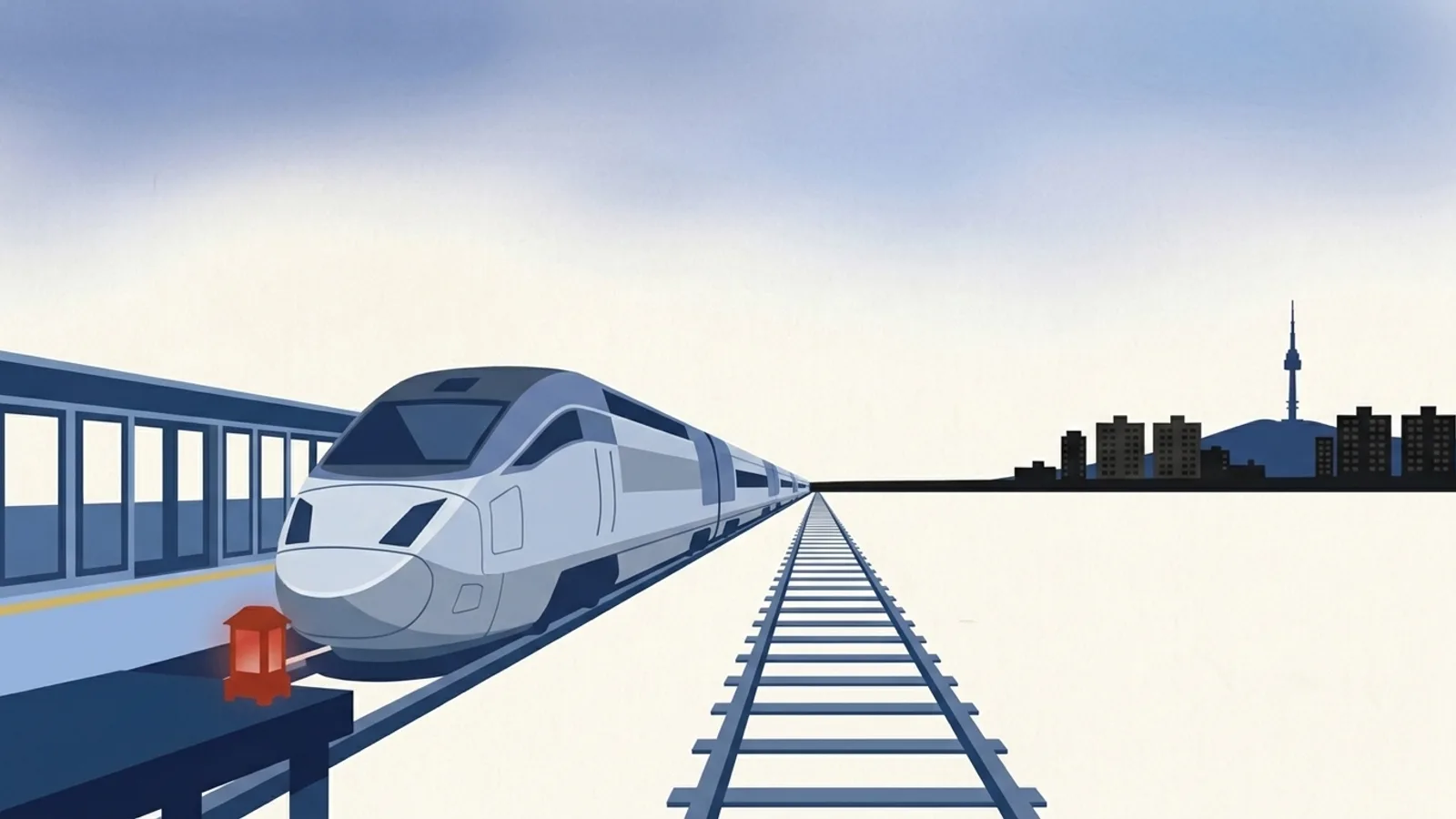
South Korea's high-speed rail network is the most efficient way to cross regions. Trains can be booked in advance online via the official Let’s Korail site or the Korail+ app.
- Gyeongbu Line (447.1 km): Links Seoul Station to Busan via Daejeon and Gyeongju.
- Honam Line (252.5 km): Connects Seoul and Seodaejeon to Mokpo via Iksan, Jeongeup, and Gwangju-Songjeong.
- Gangneung Line (237.7 km): Departs Cheongnyangni Station in Seoul, running east through Pyeongchang to Gangneung.
KTX trains run at maximum operating speeds of 330 km/h, while SRT trains travel up to 300 km/h. International visitors undertaking multiple rail journeys across consecutive days can use the Korail Pass for unlimited travel on designated rail services. This pass can be purchased online, through select agencies, or in person at Korail Tourist Information Centers located inside Seoul, Yongsan, and Busan stations.
Which transit card is right for your itinerary?
Choosing the right card depends on whether your itinerary stays entirely within Seoul or explores other regions.
| Card Type | Purchase Cost | Coverage Area | Best Used For |
|---|---|---|---|
| Tmoney Card | Nationwide (Seoul, Busan, Jeju, etc.) | Travelers visiting multiple cities, taking taxis, or riding the airport train | |
| Climate Card Tourist Pass | ₩5,000–₩20,000 (~$3.57–$14.29 USD) | Seoul metropolitan transit only | Visitors staying strictly inside Seoul for 1 to 7 days taking frequent local transit |
A standard Tmoney card requires loading stored value; an initial reload of ₩30,000 to ₩40,000 KRW (~$21.43 to $28.57 USD) is recommended for a 4-day trip. In contrast, the Climate Card offers unlimited rides on Seoul subways and local city buses for 1, 2, 3, 5, or 7 days.
Do not rely on the Climate Card for transfers from Incheon Airport, as it excludes airport rail, airport buses, out-of-boundary wide-area buses, and the Sinbundang Line. Unused physical Climate Card balances cannot be refunded without a local Korean bank account, whereas standard Tmoney balances are easily refunded before leaving.
How should you get from the airport to downtown Seoul?
Depending on your arrival terminal and luggage load, several transit options connect international gateways to the city center:
- AREX Express Train (Incheon Airport): Non-stop service from Incheon Airport directly to Seoul Station in 40 minutes.
- AREX All-stop Train (Incheon Airport): Commuter-style service reaching Gongdeok Station in 60 minutes.
- Airport Limousine Buses (Incheon Airport): Routes including 6002, 6005, 6011, and night bus N6002 connect terminals directly to major downtown hotel districts in roughly 90 minutes.
- Subway Line 5 (Gimpo Airport): Direct metro connection to central Seoul (Gwanghwamun) in 40 to 50 minutes.
Remember that some local city buses in Seoul operate entirely cashless. Keep a loaded transit card or contactless payment card ready before boarding.
Which digital apps help manage routes, taxis, and reservations?
Several local mobile apps make daily travel planning smoother for foreign visitors:
- Navigation: NAVER Map provides accurate transit directions and walking routes, while Subway Korea tracks real-time metro departure schedules.
- Taxis: Foreign tourists can hail cabs without domestic mobile verification using TABA, the official foreign visitor taxi app, or k.ride, which accepts international credit cards and Alipay. Kakao T and Uber are also widely used.
- Bookings & Tours: Creatrip lets visitors reserve restaurants, beauty clinics, and food deliveries without requiring a domestic Korean phone number. Odii offers free, GPS-based historical audio guides.
- Helpline: Dial or message the official 1330 Korea Travel Helpline for free travel assistance via online chat or web-based Wi-Fi calling.
Questions people ask
Should I buy a standard Tmoney card or a Climate Card Tourist Pass?
Choose a standard Tmoney card if you plan to travel beyond Seoul, use taxis, or enter the city from Incheon Airport. Choose a Climate Card Tourist Pass if you will be using public subways and city buses heavily while remaining exclusively within Seoul for 1 to 7 days.
Can international travelers get unlimited train travel in South Korea?
Yes. The Korail Pass is available exclusively for non-Korean travelers, offering unlimited rides across rail services including high-speed KTX lines over a designated period. It can be secured online, via travel agencies, or at Korail Tourist Information Centers inside Seoul, Yongsan, and Busan stations.
How long does it take to travel from Incheon Airport to central Seoul?
The non-stop AREX Express train takes 40 minutes to reach Seoul Station. The commuter AREX All-stop train reaches Gongdeok Station in 60 minutes, while Airport Limousine buses take around 90 minutes to reach central Seoul destinations depending on road conditions.
Can I use international credit cards on Korean transit and taxi apps?
Yes. Foreign visitors can use international cards and services like Alipay on apps like k.ride and TABA. In addition, ticket vending machines across Seoul Subway Lines 1 through 8 support foreign credit and debit cards for Climate Card reloads, subject to an overseas fee of approximately 3.7%.
Sources
- Train- VISITKOREA(opens in a new tab)
- Getting Around Korea After You Arrive: The Only Transit Card Guide You Need -(opens in a new tab)
- 한국의 구석구석 여행 버킷리스트 For ARMY - 전체 | 카드/한컷 | 멀티미디어 | 대한민국 정책브리핑(opens in a new tab)
- Helpful Apps & Resources- VISITKOREA(opens in a new tab)
- Suggested Itineraries- VISITKOREA(opens in a new tab)
- Plan Your Trip- VISITKOREA(opens in a new tab)